
Custom Squishy Toy Manufacturer for Brands & OEM Projects
Bring Your Original Squishy Toy Designs to Life
Create custom squishy toys based on your original characters, product concepts and brand requirements.
Hanyang Toy supports OEM/ODM squishy toy projects through design review, material selection, prototyping, tooling, manufacturing coordination, finishing and packaging.
Explore slow-rising PU foam squishies, flexible TPE/TPR squeeze toys and selected silicone designs, with manufacturing solutions evaluated according to your product requirements.
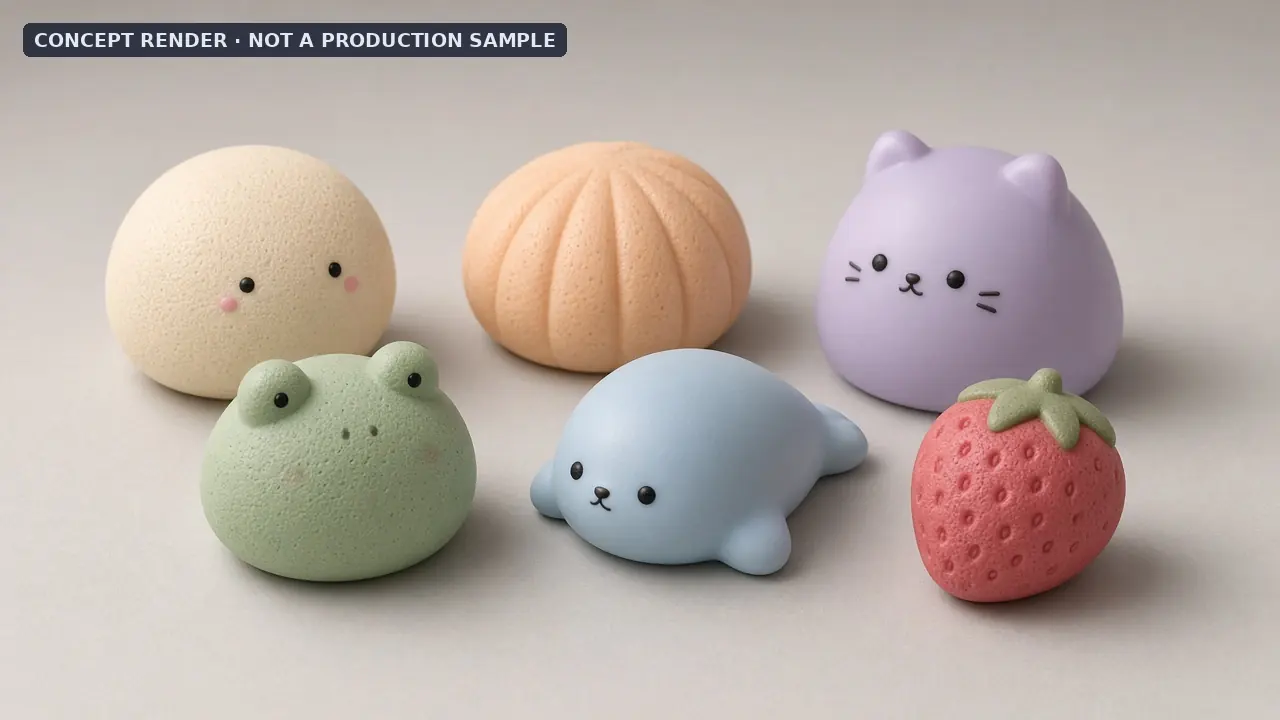
Explore the Manufacturing Process
How Are Custom Squishy Toys Made?
Learn how PU foam, TPE/TPR and silicone squishy toys are manufactured, including molding, material behavior, compression, recovery and quality control.
Custom Squishy Toys for Brands, Collectibles & Promotions
What is a custom squishy toy? A soft, compressible toy made to your own character or brand design. "Squishy" describes how the product feels and recovers, not one material: depending on the target feel, a design may be developed in slow-rising PU foam, a TPE/TPR compound or a suitable silicone. This is a B2B OEM/ODM service for brands, importers, IP owners and promotional buyers; we do not sell squishies at retail.
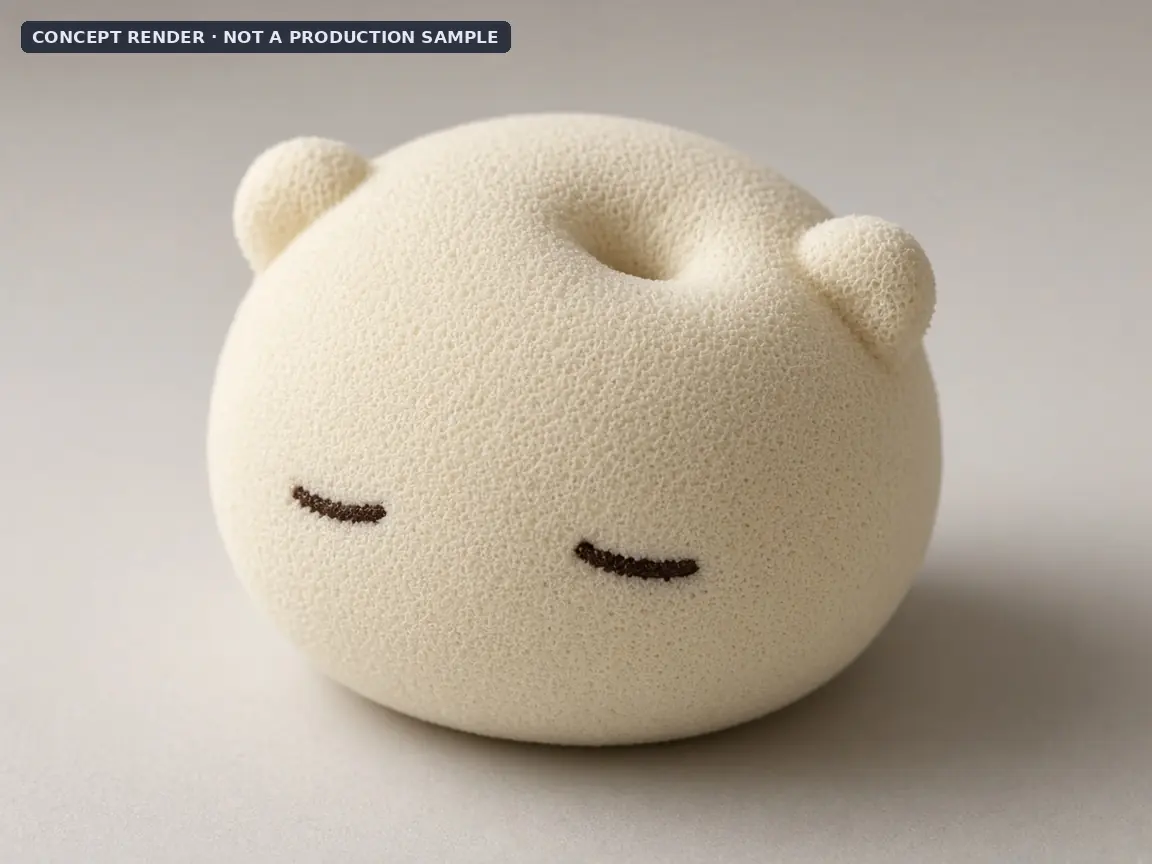
Main product line
Slow-Rising Foam Squishies
Develop original slow-rising PU foam characters with custom shapes, colors and surface finishes.
Suitable for collectible characters, promotional merchandise and selected tactile toy applications.
Character, animal, food-shaped and mascot squishies, decorative foam figures. The slow-rise effect depends on the actual formulation, product structure and sample validation.
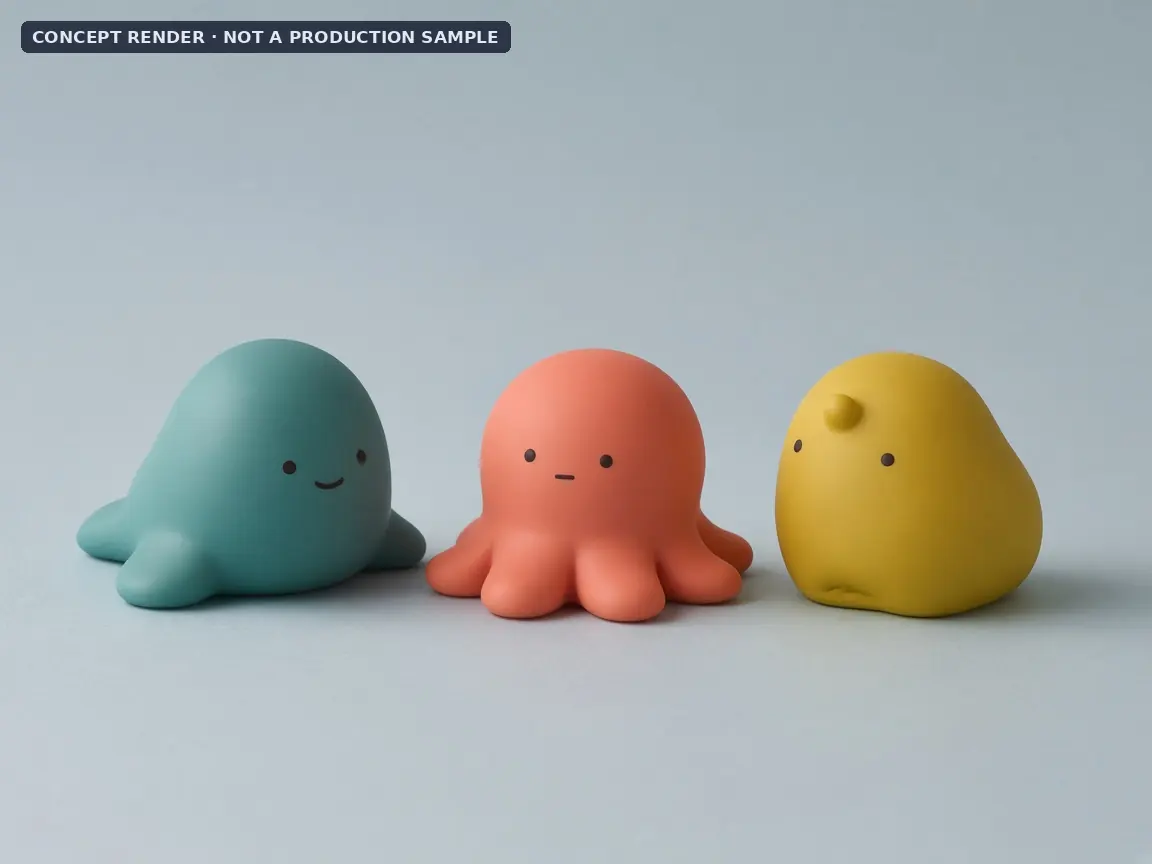
Thermoplastic elastomers
TPE / TPR Squeeze Toys
Create soft, elastic or rubber-like squeeze products using appropriate thermoplastic elastomer systems.
Material properties and internal construction are evaluated for each design.
Soft characters, stretchable figures, elastic squeeze designs and selected hollow constructions. Whether a design can stretch or take a filling depends on the compound and structure; TPE/TPR is not the same as a gel-filled toy.
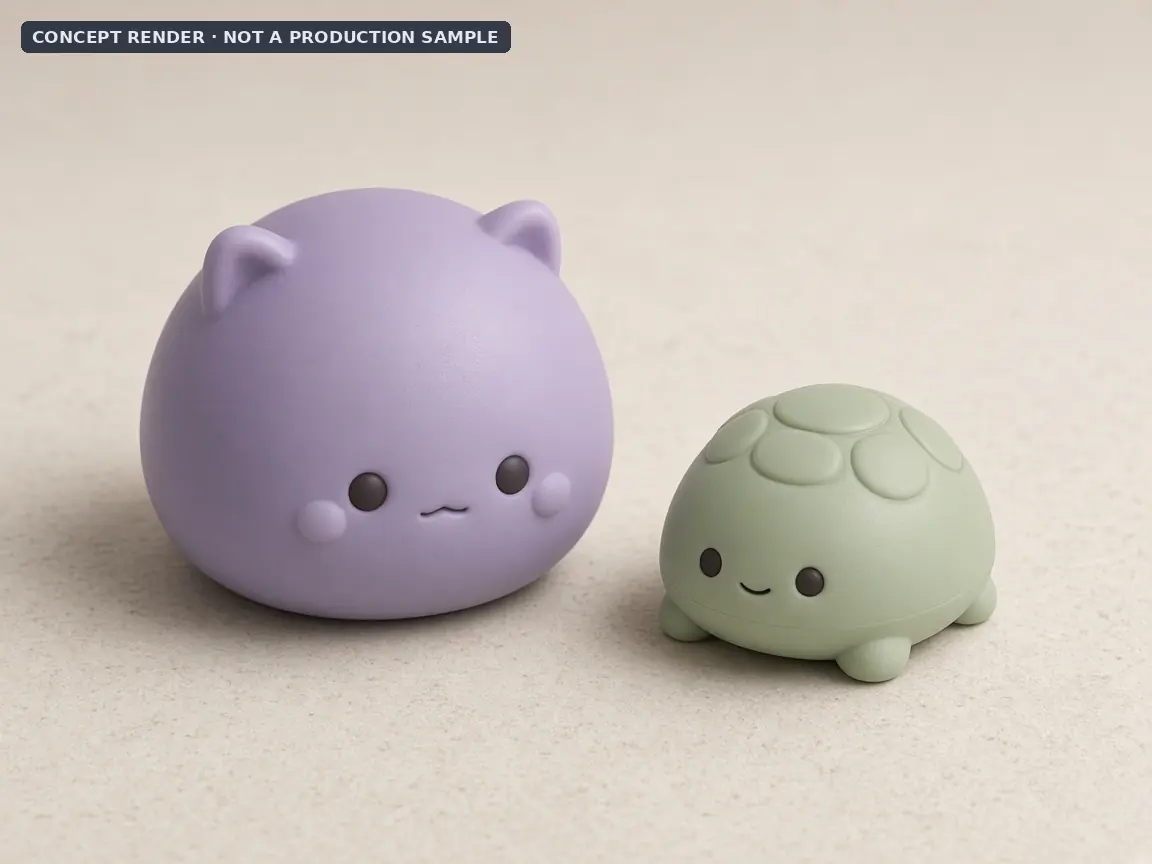
Silicone elastomers
Silicone Squishy Toys
Explore suitable silicone formulations for selected flexible character and squeeze-toy applications.
Soft elastic figures, squeeze toys and tactile products. Silicone grades differ; a silicone toy is not automatically food-grade or suitable for infants.
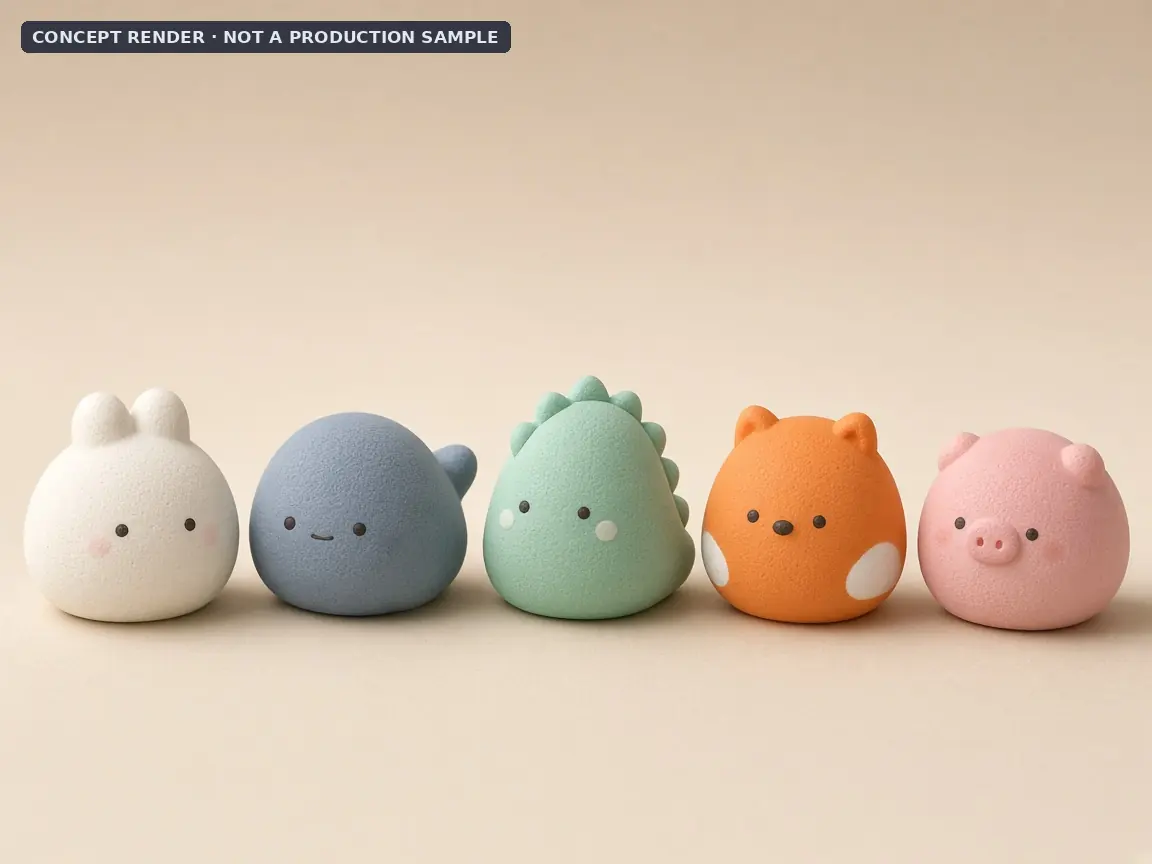
Original IP & mascots
Character Squishies
Transform original brand mascots and character artwork into customized squishy products.
The material route (PU foam or another system) is chosen from the target hand feel and the character's geometry.
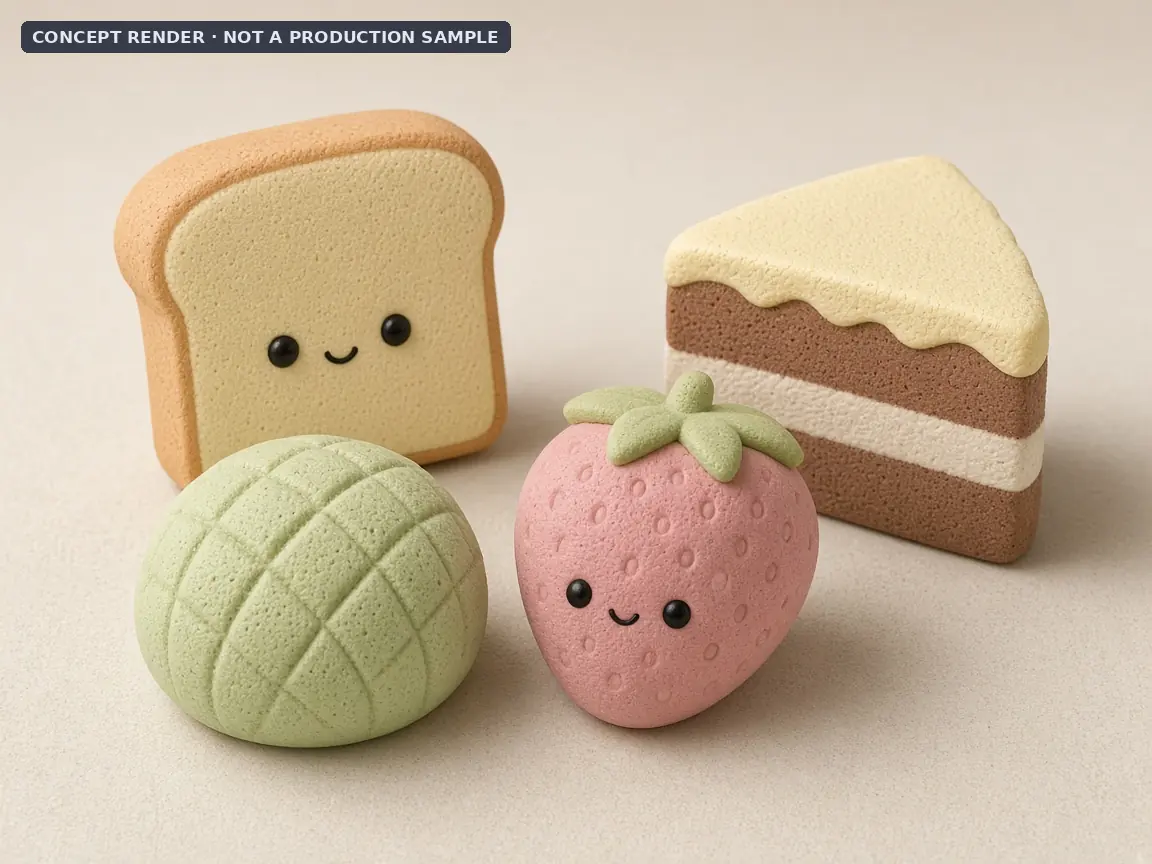
Playful shapes
Animal & Food-Shaped Squishies
Develop playful shapes with attention to material performance, appearance and intended use.
Bread, cake, fruit and dessert-inspired designs are decorative toys: never edible, mouthable or microwavable. Food-like appearance is reviewed for ingestion and misidentification risk and the destination market's rules.
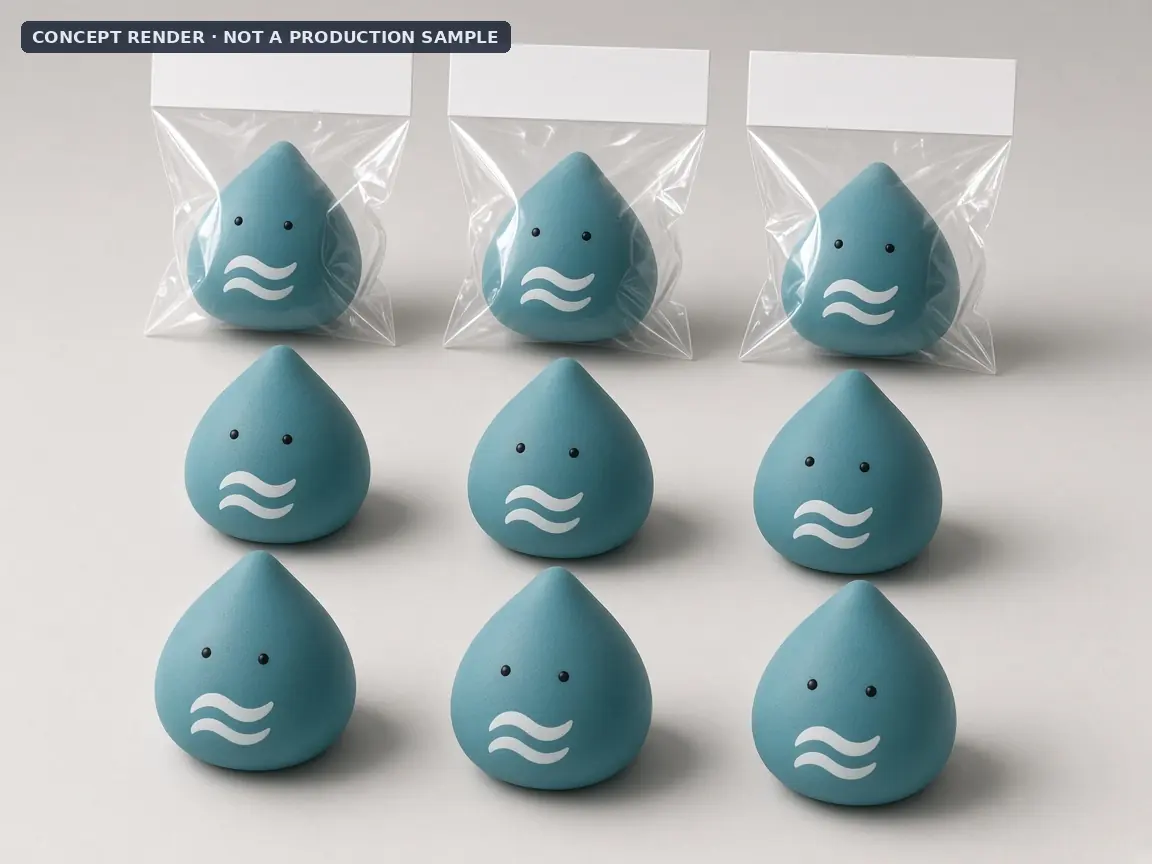
Brand marketing
Promotional Squishy Toys
Create custom branded merchandise with approved artwork, colors, packaging and suitable decoration methods.
Original brand mascots, logo-based designs, event gifts and character campaigns. Materials are chosen per product and target market.
Customize Shape, Feel, Color & Packaging
Every option below is confirmed against your artwork and on physical samples, so the quotation reflects the product you actually want to sell.
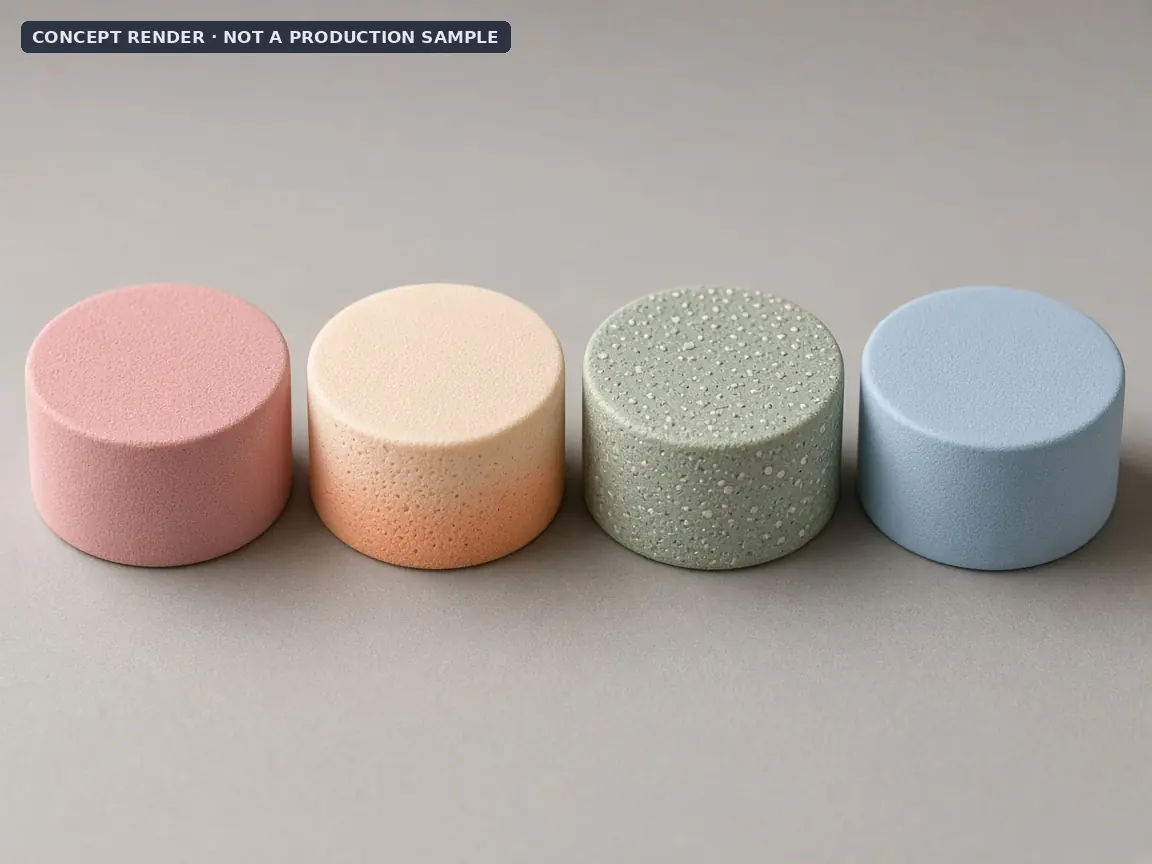
Custom Shape
Develop a unique squishy toy based on your original sketches, 3D files or design references.
Material Selection
Evaluate PU foam, TPE/TPR, silicone and other suitable material systems according to the intended product feel and structure.
Softness & Recovery
Define the desired compression and recovery behavior using physical samples and agreed evaluation conditions.
Custom Colors
Select material-compatible coloring and decoration options.
Surface Finishing
Discuss suitable coatings, printing or other finishing methods.
Product Dimensions
Confirm size based on design feasibility, handling, material behavior and packaging requirements.
Branding
Integrate appropriate brand graphics, logos or other approved artwork.
Packaging
Packaging can be evaluated for retail, promotional, gift or collectible applications.
Important: Product softness and recovery are validated through actual material samples, not assumptions based on appearance alone.
Which Squishy Material Is Right for Your Product?
| Material | Typical Characteristics | Common Applications | Important Considerations |
|---|---|---|---|
| PU Foam | Lightweight, compressible; selected formulations can recover slowly | Character squishies, foam collectibles | Foam structure, coating and recovery |
| TPE / TPR | Flexible, rubber-like properties depending on compound | Squeeze toys, elastic characters | Tear resistance, tackiness and aging |
| Silicone | Elastic properties tailored through suitable formulations | Selected squeeze figures and soft molded products | Curing, tear performance and finishing |
Selection Advice
A slow-rising PU foam product does not behave exactly like a solid TPE or silicone product.
The best material depends on your target hand feel, product geometry, durability requirements, intended age group and destination market.
Filled Squishy Constructions — Feasibility Review Only
Some squeeze designs place a separate filling inside a flexible outer shell. This is a different construction from a foam body or a solid elastomer, and it brings additional questions: shell integrity, seal design, filling compatibility, leakage and what happens if the shell ruptures.
Filled constructions are reviewed individually and are not a standard production option. Water beads, unknown liquids and other high-risk fillings are not offered as a default choice; water-bead toys are subject to specific mandatory requirements in the United States.
How We Develop Slow-Rising Squishy Toys
A custom slow-rising squishy project requires both an approved character appearance and an approved tactile result.
Development considerations include:
- Character Geometry
- Mold Feasibility
- Foam Material Selection
- Product Density and Structure
- Compression Behavior
- Recovery Characteristics
- Surface Finish
- Repeated-Use Durability
The final recovery behavior should be evaluated through physical prototypes. We do not promise one universal recovery time for every design: the result is agreed on the approved sample.
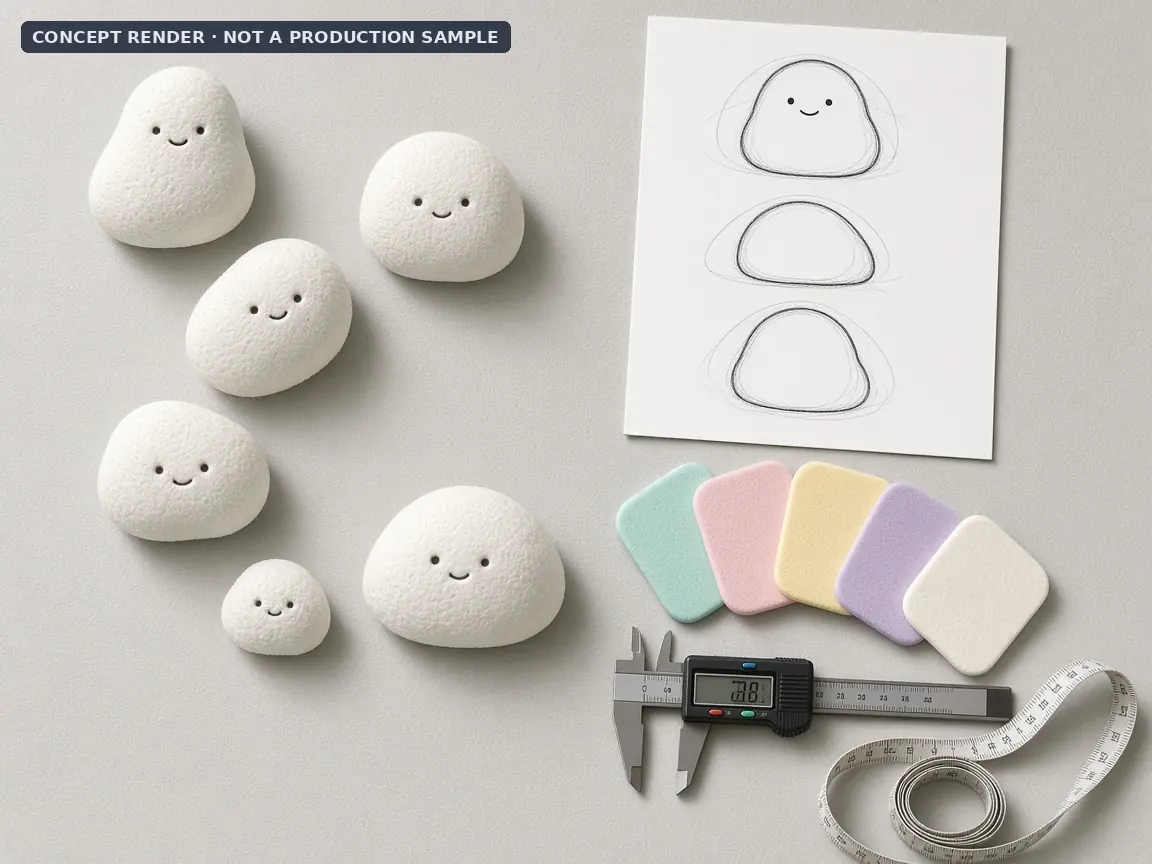
From Original Design to Finished Squishy Toys
- 01
Design Review
Review artwork, dimensions, intended use, quantity and destination market.
- 02
Material & Structure Selection
Select the appropriate product construction and material route.
- 03
3D Modeling & Engineering
Develop a manufacturable shape and review molding requirements.
- 04
Prototype Development
Create initial samples for appearance and physical evaluation.
- 05
Mold Development
Prepare suitable production tooling for the selected material and process.
- 06
Production & Finishing
Manufacture and decorate the product using the approved process.
- 07
Quality Control
Inspect appearance, material behavior and applicable durability requirements.
- 08
Packaging & Delivery
Complete approved packaging and shipment arrangements.
Important note: The actual sequence depends on the selected material system. PU foam molding, thermoplastic elastomer molding and silicone manufacturing do not use exactly the same process. See our custom toy manufacturing process overview for the general project flow.
Squishy Toy Projects for Different Markets
- Original Character Merchandise
- Toy Brand Collections
- Promotional Gifts
- Retail Squishy Collections
- Mascot Merchandise
- Selected Sensory Product Concepts
These are possible application directions. They do not mean that every design automatically meets the safety requirements of the corresponding product category.
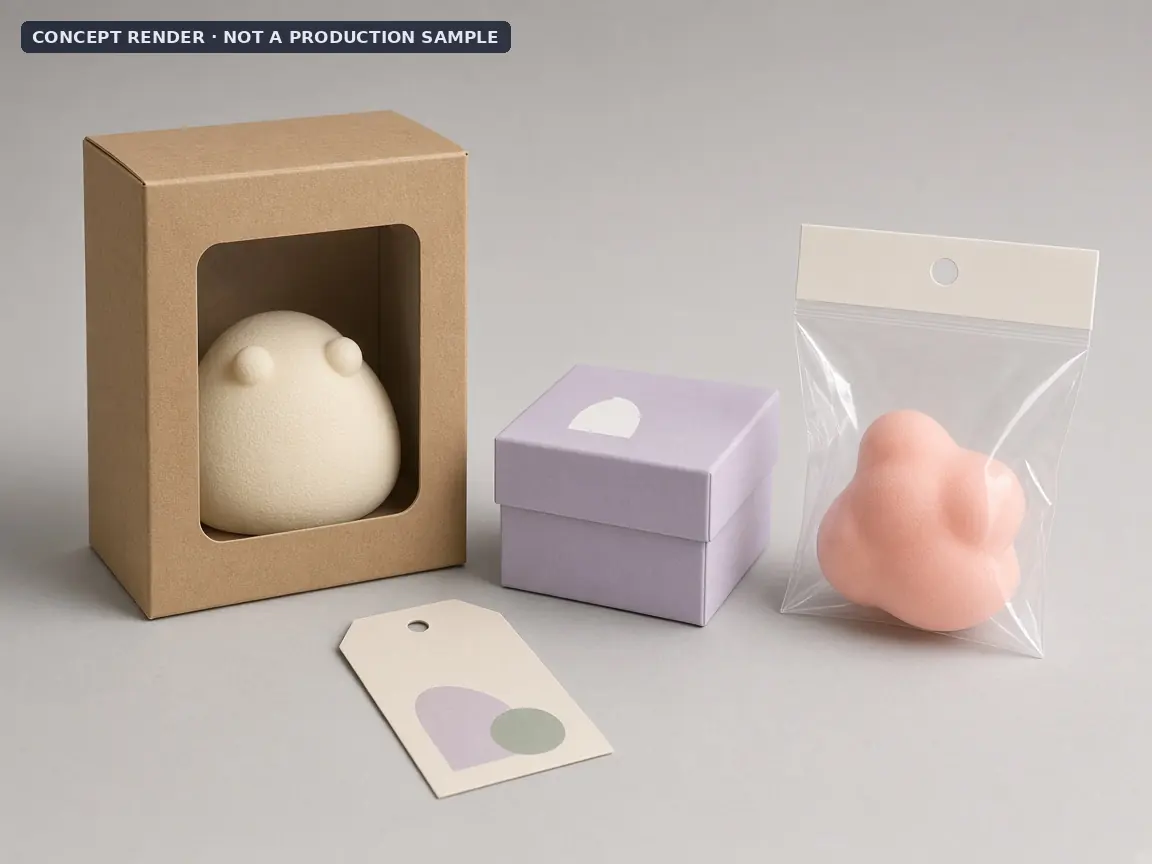
Packaging can be developed for each channel: window boxes and gift boxes for retail, polybags with header cards for promotions and events, and export cartons sized for the order. Need packaging for other figures too? See custom toy packaging.
Quality Considerations for Custom Squishy Toys
The quality-control plan should be based on the actual design and approved sample. Typical points to discuss:
Product Appearance
Shape, proportions and face details against the approved sample.
Material Consistency
Batch-to-batch feel, density or hardness within the agreed reference.
Compression and Recovery
Behavior checked with the agreed method and conditions, not by eye alone.
Surface Finish
Coating, print and texture quality, including after repeated squeezing.
Tear Resistance
Thin areas, appendages and edges reviewed for tearing in normal handling.
Permanent Deformation
Whether the product returns to shape or keeps a lasting dent after use.
Color Consistency
Body and decoration colors compared with the approved color standard.
Packaging Quality
Packing that protects shape and finish through shipping.
For filled constructions, additional considerations include shell integrity, filling compatibility and leakage risks.
Product Safety Starts with Material & Design Selection
Safety requirements vary by:
- Material
- Construction
- Intended Age
- Product Function
- Destination Market
Children's products may require applicable chemical, mechanical, flammability, small-parts and labeling assessments. Products containing independent fillings may introduce additional risks.
Assessed per product, not assumed
Hanyang Toy can review relevant testing requirements as part of project planning. Compliance must be established for the actual finished product.
We do not claim universal EN71, ASTM F963, CPSIA or other certifications for squishy toys. Test plans and laboratories are confirmed per project, based on the finished product and its market. Words such as "non-toxic", "food-grade" or "child-safe" are only used when product-specific test evidence supports them.
What Affects Custom Squishy Toy Manufacturing Costs?
Cost factors include:
- Number of Designs
- Product Dimensions
- Material System
- Mold Complexity
- Surface Finish
- Compression and Recovery Requirements
- Order Quantity
- Packaging
- Applicable Testing
MOQ
Minimum order quantities depend on the selected material, tooling method, product dimensions, decoration and manufacturing requirements.
Squishy MOQs are evaluated per project; the MOQs of injection-molded vinyl or PVC figures do not apply.
Prototype Development
Sampling costs and revisions depend on the design and technical scope.
Quotation
A complete quotation can distinguish development, tooling, production, decoration, packaging and relevant testing or shipping costs.
What should a squishy quotation request include?
Send these details through our contact form, or include links to your artwork files:
- Artwork or character references
- Target dimensions
- Quantity per design
- Desired tactile feel (slow-rising, elastic, soft rubber-like)
- Intended age group
- Destination market
- Packaging requirements
A Development Partner for Custom Character Products
Original Character Development
Review original artwork and translate designs into practical production specifications.
Material-Based Manufacturing Planning
Compare different materials and constructions rather than assuming one process suits every product.
Multi-Category Toy Development
Coordinate squishy projects alongside other collectible, PVC, vinyl and plush toy development needs.
Sample-Based Approval
Use agreed samples and specifications to establish appearance and functional expectations.
Overseas Project Communication
Support design review, quotation, prototype development, production planning and shipping coordination.
Custom Squishy Toy FAQ
Can you manufacture custom squishy toys from my artwork?
Yes. Original artwork and clear design requirements can be reviewed to develop a suitable manufacturing plan.
What materials are commonly used for squishy toys?
Depending on design and construction, PU foam, TPE/TPR, silicone and other suitable material systems may be considered.
Can you make slow-rising squishy toys?
Selected PU foam formulations can provide slow-rising behavior. The final result needs sample validation.
Can I choose the softness and recovery feel?
These properties can be discussed during material selection and evaluated using physical samples and appropriate tests.
Do I need a 3D model?
A clear drawing may be sufficient for an initial review. A production-ready model may be developed during engineering.
Can you customize the shape and colors?
Yes. The design can be reviewed for suitable tooling, coloration and decoration.
What is the MOQ for custom squishy toys?
MOQ depends on the product, material, tooling and production requirements.
Can different designs be combined in one order?
Multiple designs can be evaluated together, but separate tooling or production minimums may apply.
Can you produce food-shaped squishies?
Suitable food-inspired decorative designs can be evaluated, including relevant product-safety considerations.
Can you make filled squishy toys?
Selected filled constructions may be reviewed individually. Shell integrity, filling safety and market regulations must be evaluated before accepting a production project.
Are squishy toys safe for children?
Safety depends on the complete product design, materials, intended age and applicable market requirements.
Can I request a prototype before mass production?
Prototype development can be scoped and quoted separately according to the project.
Can you provide custom packaging?
Suitable branded and protective packaging can be developed according to the approved product requirements.
How do I request a squishy toy quotation?
Provide artwork, dimensions, quantity per design, desired tactile feel, intended age group, destination market and packaging requirements.
Ready to Create Your Custom Squishy Toy?
Share your original character artwork, target dimensions, desired material feel and estimated production quantity.
Hanyang Toy can help review the project and discuss suitable development and manufacturing options.
Get a Custom Squishy QuoteAll product images on this page are AI-assisted concept renders of original designs created for illustration. They are not photos of production samples, customer projects or test results.