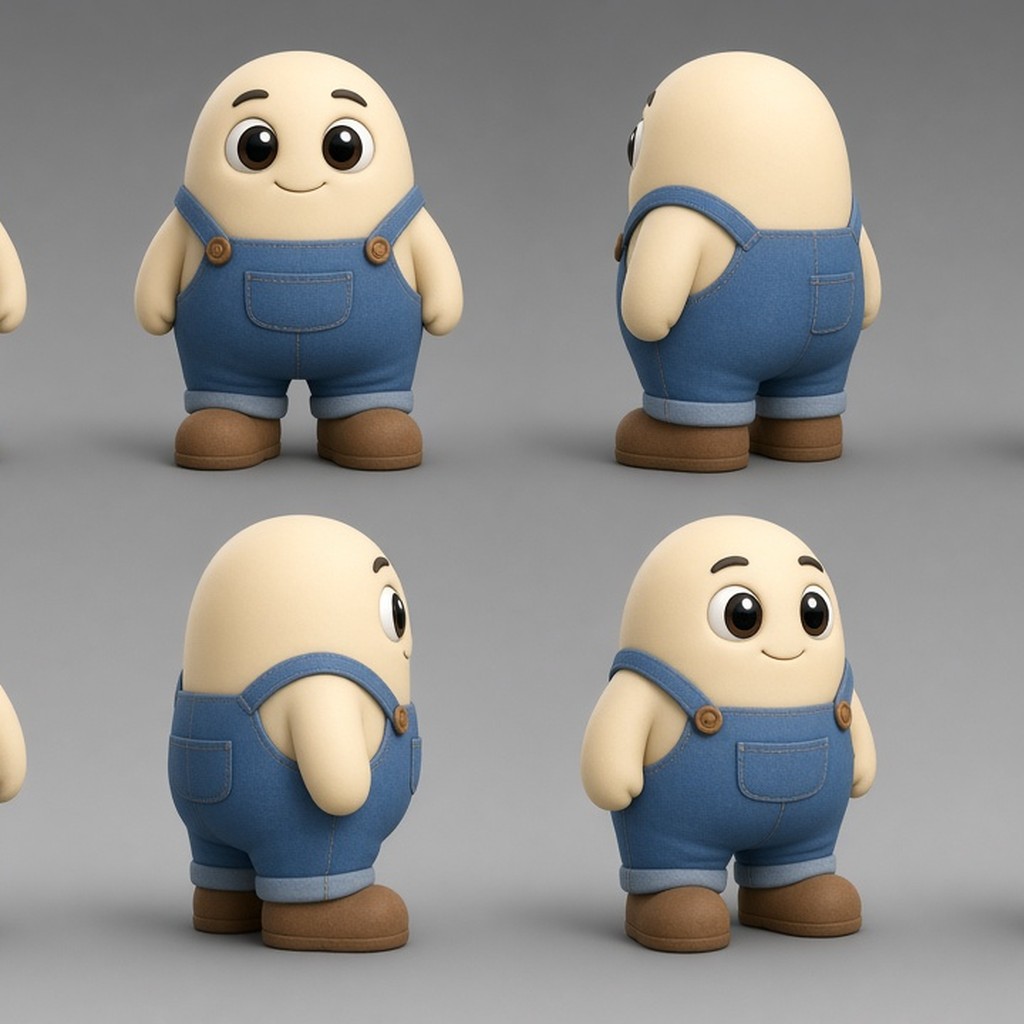
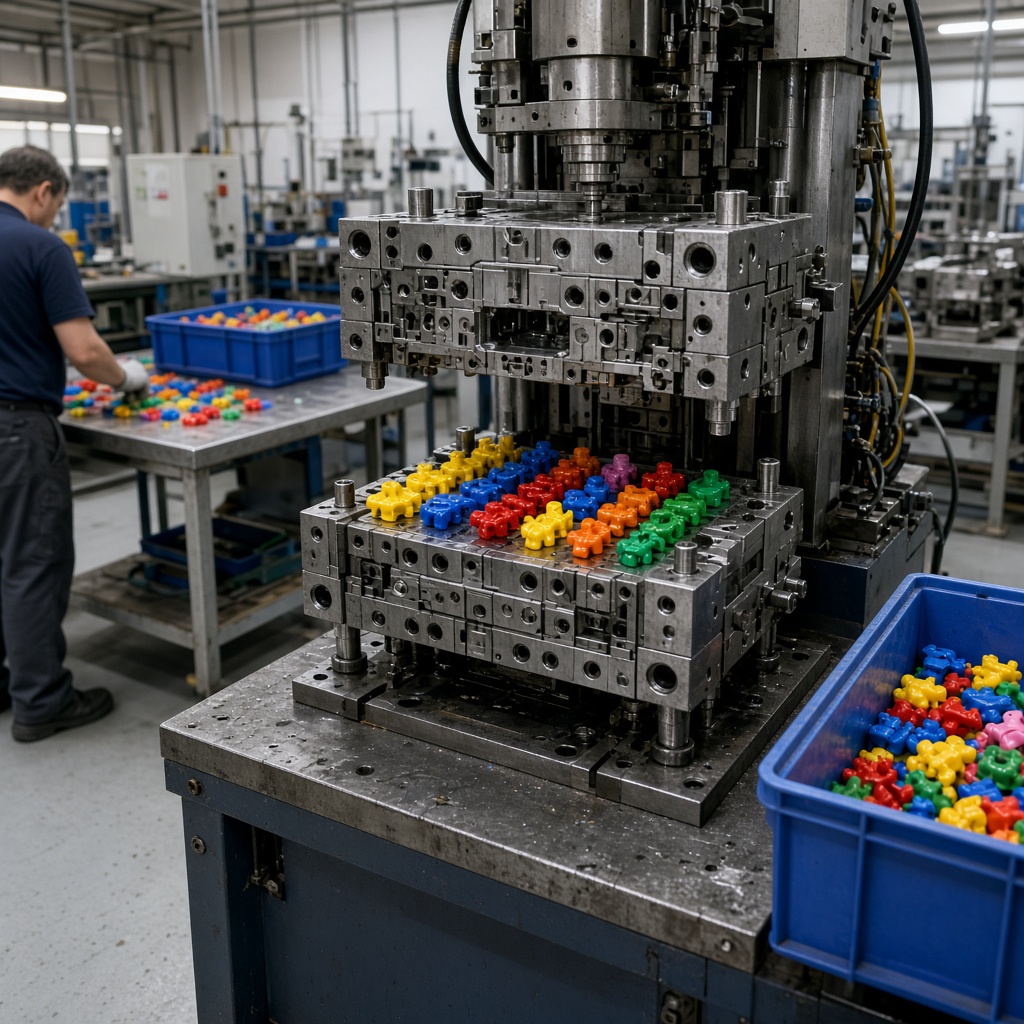
A custom blind box program turns your original characters into a sealed, series-based collectible: several figure designs, an opaque inner pack that hides which one the buyer gets, and an outer box that sells the whole lineup. For a brand, the hard part is not the idea. It is turning a character sheet into molded, painted, packed and inspected units that look the same on the first carton and the last.
This guide walks through custom blind box manufacturing the way a factory sees it: how a series is scoped, which materials and molding routes fit, how samples and tooling are approved, what drives cost, how packaging and quality control work, and what to send in your first brief. If you are new to the format, start with our explainer What Is a Blind Box?. If you already have designs, you can go straight to our custom blind box manufacturing page or send an inquiry.
What a custom blind box actually is to a manufacturer
The single most useful idea for a buyer is this: a blind box is a sales format, not a material and not a production process. When a brand says “we want a blind box,” the factory still has to answer four separate questions. What product category is it (fixed-pose figure, small art toy, keychain, articulated figure)? Which material or combination of materials does each part use? Which forming process makes each part? And which stage of development is the project in right now: an idea, a 3D file, a printed sample, or an approved production sample?
Mixing these layers up is the most common source of confused quotes. “Blind boxes are all injection molded” is not true; the right process depends on the shape and structure of each figure. “Soft PVC” describes a material formulation, not a molding method. And “we already have an STL, so you can open the mold” skips the engineering steps that decide whether a file can actually be produced at scale. A good manufacturing partner will separate these questions for you before giving a number.
From the factory floor, one blind box series is really a family of related jobs: several sets of tooling, a shared set of color standards, a decoration plan per character, an assembly sequence, and packaging SKUs that must match the assortment you promise retailers and fans. Every one of those pieces needs a version number and an approval, because a series is often reordered and the reorder has to match the original.
Planning the series before you ask for a quote
The quality of a blind box quote depends almost entirely on how clearly the series is defined. Before you contact factories, it helps to lock down the roster and the commercial shape of the drop.
Roster, size and structure
List every design in the series, including any secret or chase variants, and give each one a target size in millimetres (height, width and depth). Note whether each figure is a single solid piece or several parts, whether anything moves or detaches, and whether the series shares a common base or body. Shared structure can simplify engineering, but unique heads, props and silhouettes usually still need their own tooling. A short series sheet with front, side and back views of every character will save several rounds of back-and-forth.
Quantity per design, not per series
Minimum order quantity is counted per design, not across the whole series. For standard fully custom PVC figures and blind box figures, Hanyang Toy’s public MOQ is 3,000 pieces per design. The table below shows why the total number of units in a series is not the same thing as meeting that minimum.
| Series plan | Total units | Meets the standard per-design MOQ? |
|---|---|---|
| 1 design × 3,000 | 3,000 | Yes |
| 3 designs × 1,000 | 3,000 | No |
| 6 designs × 500 | 3,000 | No |
| 6 designs × 3,000 | 18,000 | Yes |
This matters most for start-up brands. A first drop of six characters at a few hundred units each looks modest on paper, but each design still carries its own engineering and tooling. Practical options include launching with fewer designs, simplifying shapes so tooling is lighter, or discussing whether a different production route suits the volume. Any lower-volume route has to be confirmed by the factory’s engineers for that specific project; it should never be assumed.
Purpose, market and age group
Tell your manufacturer early whether the figures are adult collectibles, display or gift items, or toys intended for children to play with, and which countries you will sell in. That single answer shapes material choices, small-part decisions, paint and coating testing, labelling and the paperwork you will need at the end. A “14+” label on the box does not, by itself, change how a regulator classifies a product; the real intended use does.
Materials and molding routes for blind box figures
Most blind box figures are small, detailed and painted, so injection-molded PVC and ABS are the usual starting point. But material and process should be chosen per part, based on how it needs to look, feel and function.
| Material | Typical character | Where it fits in a blind box | What to confirm |
|---|---|---|---|
| Soft PVC | Adjustable flexibility, softer hand feel | Character bodies, fixed-pose figures, soft art-toy shapes | Hardness target, compliant formulation, color consistency |
| Hard PVC | More rigid, holds fine detail | Detailed figure parts and cosmetic pieces | Thin walls, warping, small-part assembly |
| ABS | Structurally stable and stiff | Bases, joints, pegs and clip-together structure | Snap-fit tolerances, drop resistance, cracking |
| TPE / TPR | Elastic, adjustable compression and rebound | Squeezable or flexible connecting parts | Shore A hardness, tear strength, durability |
The same figure can, and often does, mix materials: ABS for a peg or joint that must hold its shape, PVC for the visible body. Wanting a “soft feel” does not mean every part should be soft, especially where parts click together or carry load.
Switching a series from hard PVC to soft PVC is a frequent cost question. Changing the hardness of the material does not automatically change the molding process, and it does not automatically mean cheaper tooling. The honest answer comes from re-quoting each design with its own structure, part count, target hand feel and number of colors.
Injection molding is generally the most repeatable route for multi-part figures where parts must fit together, with the trade-off of higher up-front tooling and less freedom to change structure after the mold is cut. Larger, rounded, hollow designer-toy shapes are usually evaluated for slush-cast or rotational vinyl instead (see our custom vinyl figure page), and very small runs of statues or trophies may suit resin casting from silicone molds, which is not the same as steel injection tooling. For a deeper comparison of the two most common blind box plastics, read PVC vs ABS for custom figures, or browse our custom PVC figures page.
From design files to tooling: engineering, samples and sign-off
A 3D model made for display or printing is not yet a production model. Before tooling, engineers still have to confirm how each figure is split into parts, wall thickness, snap fits and tolerances, parting lines, undercuts, and the fixtures needed for painting. Whether the factory also needs an engineering format such as STEP depends on the tooling route. This design-for-manufacturing (DFM) review is where many blind box projects either get much easier or reveal a problem early, while it is still cheap to fix.
Each approval in the project should point to a specific sample type and file version. Treating a white 3D print, a hand-painted sample and a production sample as interchangeable is one of the costliest mistakes a buyer can make.
| Sample stage | What you are approving | What it does not prove |
|---|---|---|
| White model / 3D print | Shape, proportions, size and main part split | Final material strength or surface finish |
| Functional sample | Joints, clips, softness and how parts connect | That the structure is final for production |
| Painted prototype | Colors, facial expression, detail and surface feel | That fine hand-painted effects can be copied identically at volume |
| Mold trial sample | Molding results, dimensions and defects from real tooling | That no mold adjustment is needed |
| Final approved sample (golden sample) | Mass-production appearance, structure, colors, packaging and inspection standard | Nothing, as long as both sides keep a signed, versioned record |
Three rules keep a series on track. First, freeze every mold-related part of the design before tooling starts, and confirm that version in writing. Second, understand that after the mold is cut, any change to dimensions, part splits, connections or edges has to be re-evaluated for cost, timing and scrap risk. Third, approve mass production only against a final sample made with the real production process, with colors, materials, packaging, accessories and acceptable tolerances recorded.
Our customized manufacturing process page shows how these stages fit together from first brief to shipment.
Paint, decoration and what really drives unit cost
Two blind box figures of the same height can have very different unit prices. A plain, single-color figure might need one molding step and one coat. A detailed character might need several masked spray operations, multiple pad-printed details for eyes and logos, some hand-painted touches and manual assembly. Part count, masking stations, print passes and labour time often matter more than size or weight.
| Decoration method | Typical use | Main cost driver |
|---|---|---|
| Molded-in color | Color comes from the material itself | Colorant and changeover waste |
| Spray painting | Large areas, gradients and shading | Masking steps and number of coats |
| Pad printing | Eyes, logos and fine lines on curved surfaces | Print positions and number of colors |
| Hand painting | Local details and artistic effects | Labour time and reject rate |
| Metallic finish | Gold, silver or metal-look effects | Choice of metallic paint or coating method |
| Matte or gloss coat | Uniform surface feel and protection | Coating type, wear and water resistance |
To get a quote you can compare, send color references (Pantone values or an approved physical sample), a paint separation drawing, a print-position drawing, the appearance grade you expect and the color tolerance you can accept. Without those, two factories are effectively quoting two different products.
Packaging the drop: inner packs, outer boxes and assortment
Packaging is what makes a set of figures a blind box, so treat it as part of the product rather than an afterthought. A typical structure includes an opaque inner (a bag, sleeve or sealed tray) that hides the figure and protects paint, a printed outer box or sleeve with series art, any collector card or insert, barcodes and labels, and a display box or master carton.
- Protection: inner trays and wraps should stop paint rubbing and small parts breaking in transit; ask how the pack will be drop- or transit-checked.
- Concealment: the inner must not reveal which design is inside through weight, shape or see-through materials, if surprise is part of your promise.
- Assortment rules: write down how designs and chase variants are distributed per display box and per carton, so packing on the line matches what your marketing says.
- Labelling: age grading, warnings, barcodes and importer details depend on your sales markets and should be agreed before artwork is finalised.
- Print minimums: boxes, inserts and cartons have their own plate costs and minimum print quantities, separate from the figures.
Packaging should go through the same versioned approval as the figures, and the final approved sample should include it. For more on retail boxes, inserts and window packs, see our custom toy packaging page.
Quality control and export compliance
Quality on a blind box series is checked across five areas: appearance (proportions, color difference, paint, printing, flash, parting lines and marks), dimensions and structure (measured size, wall thickness, fit, clips and joints), performance where relevant (rebound, wear, connection life, drop), materials and safety (specified material, hardness, target age and local legal requirements), and packaging and shipping (inner protection, labels, barcodes, cartons and transit checks). A pre-shipment inspection should also reconcile order quantities, sampling records, carton marks and the packing list.
Compliance depends on who the product is for and where it is sold. In the United States, toys intended for children 12 and under generally need testing by a CPSC-accepted third-party laboratory and a Children’s Product Certificate (CPC), and ASTM F963-23 applies to toys manufactured from its effective date; which clauses apply depends on the product. In the European Union, toys must be assessed against the applicable regulation, harmonised standards and chemical requirements, and the new Toy Safety Regulation (EU) 2025/2509 phases in, with most substantive requirements applying from 1 August 2030. Always check the rules that apply on your actual shipping date.
Keep the documents straight: an inspection report, a declaration of conformity, a certification and a laboratory test report are different things and cannot stand in for one another. A sample that passes a visual check has not passed a third-party toy safety test. Coatings, paints, base materials, soft plastics and small parts each need the test scope that the applicable rules require.
Lead times and costs: how to read a quote
Separate the timelines
Ask any factory to break timing into separate parts instead of one number: development (file review, 3D work, prototypes and your revisions), tooling (mold design, machining, trials and adjustments), mass production (materials, molding, decoration, assembly and packing), testing and inspection (lab scheduling, retests and fixes) and transit (pickup, export, freight and customs). Production days are not the same as the day the goods reach you, and EXW, FOB and delivered terms each change what is included. Timelines are project-specific, so treat any figures you are given as a reference for that project, not a promise for every series.
The usual causes of delay are predictable: only a single front-view image with no side or back design, unclear material or function targets, colors, packaging and accessories for several designs that are not yet frozen, differences between an early print and the real production sample, and unclear market or testing responsibility for products aimed at children.
Understand the cost structure
For a first order, a useful way to think about cost per unit is: the production unit price, plus one-time costs (modelling, sampling and tooling) divided by the first-order quantity, plus any packaging, testing or logistics costs not already in the unit price. This is why very small first runs look expensive per piece: the same tooling is spread across fewer units. A clear quote should list separately:
- 3D modelling and engineering, and how many revision rounds are included
- White models, painted prototypes and functional samples, and whether any of these are credited later
- Tooling cost, who owns the molds, expected mold life, storage and repair terms
- Unit production cost: material, molding, spraying, pad printing and assembly
- Packaging: inner trays, color boxes, labels, cartons and print plates
- Testing and certification costs for your markets
- Trade terms (EXW, FOB or delivered), currency validity and delivery timing
Reorders should be quoted separately from the first order. If the molds can be reused, a reorder may not repeat the one-time tooling cost, but maintenance, storage, color re-matching, version changes and new packaging can still add cost. A responsible factory will not promise a fixed lowest reorder price before checking.
Common mistakes brands make with blind box series
- Counting MOQ across the series. Six designs at 500 each is not the same as one design at 3,000.
- Approving a 3D print as if it were production. Only the final production-process sample should be the acceptance standard.
- Changing structure after tooling. Late changes to splits, sizes or edges cost money, time and sometimes scrap.
- Quoting by size alone. Paint complexity, part count and assembly drive unit price as much as height.
- Leaving packaging and assortment to the end. Pack-out rules, print minimums and labelling need to be planned with the figures.
- Unclear IP status. Factories need proof that you own the original design or hold a valid commercial license before development starts.
- Assuming one certificate covers everything. Compliance depends on age group, market and materials, and different documents serve different purposes.
How to brief a blind box manufacturer
You will get faster, more accurate answers if your first message covers the questions a factory’s sales and engineering team will ask anyway:
- Is the product for children to play with, adult collectors, display or gifting, or functional use?
- Which countries will you sell in, and what is the target age of the end user?
- How many designs are in the series, and how many pieces of each design do you need?
- What is the approximate size of each figure (height × width × depth in mm), and is there a weight target?
- Do you have three-view drawings, STL, OBJ or STEP files, or a physical sample?
- Do you own the original design, or hold a valid commercial license for it?
- Should the figures be rigid, soft or squeezable with rebound? Solid or hollow?
- Do they need joints, detachable parts, magnets or any other function?
- What packaging do you want, how many colors per figure, and what quality level?
- What is your budget and target delivery date, and do you prefer EXW, FOB or delivered pricing?
We work on client-owned or client-authorized designs only. Share your character files and series plan, and our team will review them, flag what is missing and come back with the next practical steps.
Frequently asked questions
What is the MOQ for a custom blind box?
For standard fully custom PVC blind box figures, our public MOQ is 3,000 pieces per design. The minimum is counted per design, so a six-design series at 500 units each does not meet it. Resin pieces, special soft-vinyl items and one-off prototypes follow different rules and are reviewed case by case.
How long does custom blind box manufacturing take?
It depends on the series. Ask for development, tooling, mass production, testing and transit as separate timelines, because each has its own risks. Any timing given for a project is a reference for that project only, and frozen designs, complete files and fast sample approvals do the most to keep it short.
Can a 3D printed sample be used to approve mass production?
No. A 3D print confirms shape, proportions and part split. Mass production should be approved against a final sample made with the real production process, with colors, materials, packaging, accessories and tolerances recorded and signed off by both sides.
Does switching from hard PVC to soft PVC make a blind box cheaper?
Not automatically. Changing material hardness does not necessarily change the molding process or reduce tooling. Each design has to be re-quoted on its structure, part count, target hand feel and number of colors.
What should a custom blind box quote include?
Modelling and engineering, prototypes and samples, tooling cost and mold ownership, unit production cost (material, molding, painting, printing, assembly), packaging, testing and certification, and trade terms with the quote’s validity period. Reorder pricing should be listed separately.
Do blind box figures need safety testing?
It depends on the intended user and the market. In the US, toys for children 12 and under generally need third-party testing by a CPSC-accepted lab and a Children’s Product Certificate. EU toys must be assessed under the applicable regulation and standards. A visual inspection does not replace laboratory testing.
Next step
Planning a custom blind box series? Send us your brief through the inquiry form with your design count, quantity per design, target size, market and packaging ideas. We will review your files and reply with the questions, sampling route and quotation structure that fit your project. Looking for manufacturing services? See our custom blind box manufacturing services.